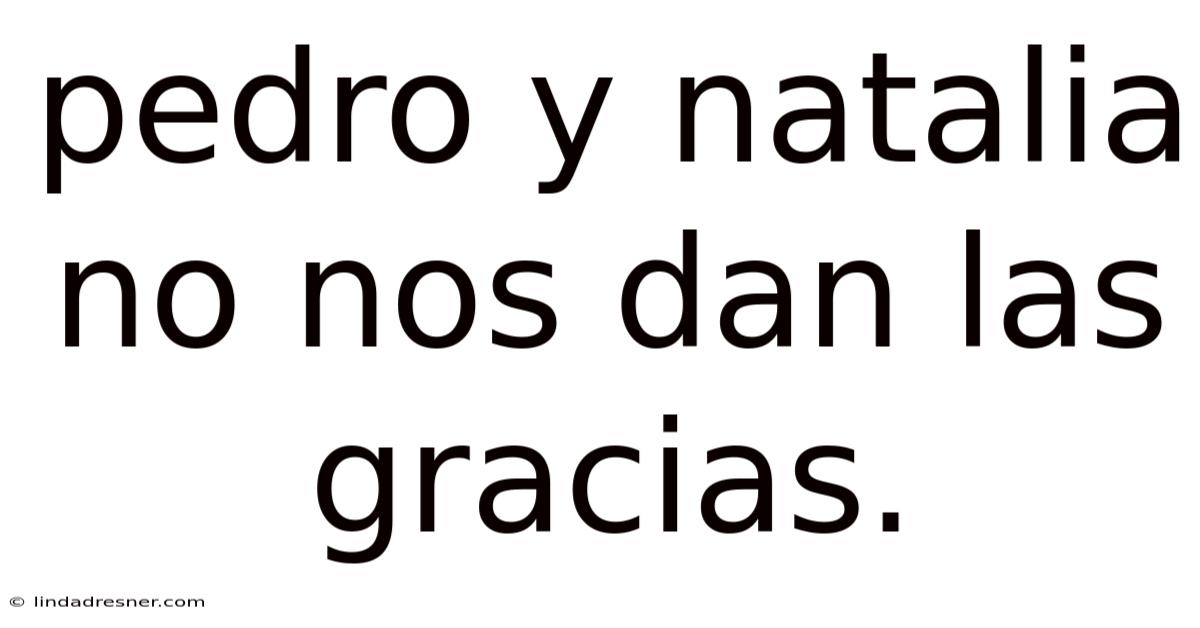
In the quiet corners of our daily lives, there exist moments that linger like whispers, unnoticed yet deeply felt. At first glance, this phrase may seem simple, but it carries layers of meaning that invite reflection. When we explore this topic, we uncover not just a simple statement but a rich tapestry of emotions, cultural nuances, and personal connections. Understanding why people might say this phrase can be a powerful tool for self-awareness and communication. Consider this: one such moment revolves around a question that often surfaces in unexpected places: Pedro y Natalia no dan as graças. This article digs into the heart of the matter, offering insights that resonate with both everyday experiences and deeper emotional truths.
The phrase Pedro y Natalia no dan as graças translates to Pedro and Natalia don’t give thanks. It is a statement that, while seemingly straightforward, invites us to consider the unspoken emotions behind such a declaration. In practice, in many cultures, expressing gratitude is a vital part of human interaction. Yet, sometimes, people may feel unworthy of appreciation, or perhaps they are in a situation where they cannot reciprocate. This silence can be a powerful signal, one that speaks volumes about the speaker’s inner world. To fully grasp this concept, Make sure you explore the context in which this phrase emerges. It matters Still holds up..
Understanding the significance of this statement begins with recognizing the roles of Pedro and Natalia. Consider this: these names, though simple, carry a weight that reflects their relationships and the dynamics at play. It could be a reflection of unmet expectations, unresolved tensions, or a lack of recognition. If Pedro and Natalia are individuals in a partnership, friendship, or family, their decision to withhold thanks might stem from a variety of reasons. The act of not giving thanks might not be a conscious choice but rather an unconscious response shaped by past experiences or emotional barriers.
One possible reason for this silence is the emotional distance between the individuals. This distance can be subtle, but it becomes more pronounced in moments where recognition is expected. Here's a good example: if Pedro and Natalia are in a professional setting, their lack of thanks might stem from a feeling of being undervalued. When people feel disconnected, they often struggle to express gratitude. In such cases, the absence of acknowledgment can feel like a rejection, even if unintentional And that's really what it comes down to. But it adds up..
Another perspective lies in the psychological impact of not expressing gratitude. Plus, when someone withholds thanks, it can create a ripple effect. It may lead to feelings of isolation or frustration in the recipient, who might perceive the silence as a lack of care. That's why this dynamic highlights the importance of communication in maintaining healthy relationships. If Pedro and Natalia are in a situation where they are not reciprocating gratitude, it could indicate a deeper issue that needs addressing That alone is useful..
The phrase also invites us to consider the cultural context in which this statement is made. Understanding these nuances is crucial for interpreting the meaning behind Pedro y Natalia no dan as gracias. In some cultures, expressing gratitude is deeply ingrained, while in others, it may be seen as a sign of weakness or insincerity. It is not merely about the words themselves but about the values and expectations they reflect.
Beyond that, the act of not giving thanks can be a test of resilience. But for individuals who struggle with expressing gratitude, this silence might be a testament to their strength. Even so, it shows that they are navigating their emotions carefully, even when it feels challenging. This resilience is something to be acknowledged and respected.
To explore this further, it is helpful to break down the components of the statement. The phrase no dan as gracias emphasizes a lack of acknowledgment. This lack can manifest in different ways, such as:
- Ignoring gestures of appreciation: If Pedro and Natalia receive compliments or help, they may choose not to respond, either out of indifference or a desire to maintain emotional boundaries.
- Avoiding confrontation: Sometimes, people avoid discussing such matters to prevent conflict. This silence can be a protective mechanism, allowing them to preserve their peace.
- Feeling unworthy: The phrase might also reflect a deeper belief that their efforts are not recognized, leading to a sense of inadequacy.
These interpretations underscore the complexity of human emotions. They reveal that Pedro y Natalia no dan as gracias is not just a statement but a reflection of inner struggles and unspoken truths. It is a reminder that sometimes, what we say—or choose not to say—can carry more weight than we realize.
In practical terms, understanding this phrase can empower individuals to work through their relationships more thoughtfully. In real terms, if someone notices that Pedro and Natalia are not giving thanks, it may prompt a conversation about their feelings. This dialogue can grow empathy and strengthen connections. It also encourages self-reflection, helping individuals recognize their own emotional patterns and the importance of gratitude in their lives.
The importance of this topic extends beyond personal relationships. Here's the thing — it touches on broader themes of emotional intelligence and communication skills. Day to day, learning to articulate feelings and acknowledge appreciation is a fundamental aspect of building trust and understanding. For students, educators, and professionals, this article serves as a valuable resource, offering insights that can enhance interpersonal interactions Not complicated — just consistent..
When we consider the scientific perspective, research suggests that gratitude has a big impact in mental health and social bonding. By understanding Pedro y Natalia no dan as gracias, we are not just analyzing a phrase but engaging with the science of human connection. Conversely, its absence may lead to feelings of isolation. Expressing thanks can boost happiness and strengthen relationships. This knowledge can motivate individuals to reflect on their own behaviors and the impact they have on others.
Worth adding, the emotional resonance of this topic cannot be overlooked. It touches on universal themes of respect, recognition, and self-worth. Here's the thing — when people feel valued, they are more likely to thrive. Still, on the other hand, when they are overlooked, it can erode their confidence. This duality highlights the significance of addressing such moments with care and intention.
In everyday life, this article aims to provide clarity and guidance. By examining the reasons behind this silence, we can encourage a deeper understanding of ourselves and those around us. It encourages readers to view Pedro y Natalia no dan as gracias not as a negative statement but as an opportunity for growth. This process is not just about words but about cultivating a mindset that values emotional awareness.
The scientific explanation behind this phenomenon is rooted in psychology and sociology. Still, studies have shown that gratitude enhances well-being, while its absence can lead to stress and disconnection. By exploring the why behind this phrase, we align ourselves with these findings, reinforcing the importance of emotional intelligence Easy to understand, harder to ignore. No workaround needed..
Additionally, the FAQ section is essential for addressing common questions. Readers may wonder about the reasons behind such silence or how to respond when they encounter this situation. The answers provided here are designed to be informative and reassuring, offering practical insights that resonate with diverse audiences The details matter here. That alone is useful..
When discussing Pedro y Natalia no dan as gracias, it is also important to consider the cultural significance of gratitude. In some communities, expressing thanks is a sacred practice, while in others, it may be seen as a form of politeness. Understanding these differences can help individuals work through conversations with sensitivity and respect.
Worth pausing on this one.
The steps to address this issue begin with self-reflection. Here's the thing — ask yourself: *Why am I feeling this way? What is my relationship with Pedro and Natalia?Which means * This introspection can lead to meaningful conversations that strengthen bonds. It also encourages a more mindful approach to communication, ensuring that gratitude is not overlooked Not complicated — just consistent. Practical, not theoretical..
And yeah — that's actually more nuanced than it sounds Most people skip this — try not to..
To wrap this up, the phrase Pedro y Natalia no dan as gracias is more than just a statement—it is a gateway to understanding the complexities of human emotion. By exploring its meaning, we gain valuable insights into our own lives and the relationships we cherish. This article aims to provide a comprehensive perspective, empowering readers to engage with this topic with curiosity and compassion. Whether you are navigating a personal situation or simply seeking to enhance your communication skills, this exploration offers a valuable resource that is both informative and inspiring. Let this be a starting point for deeper reflection and meaningful connection Worth keeping that in mind..
