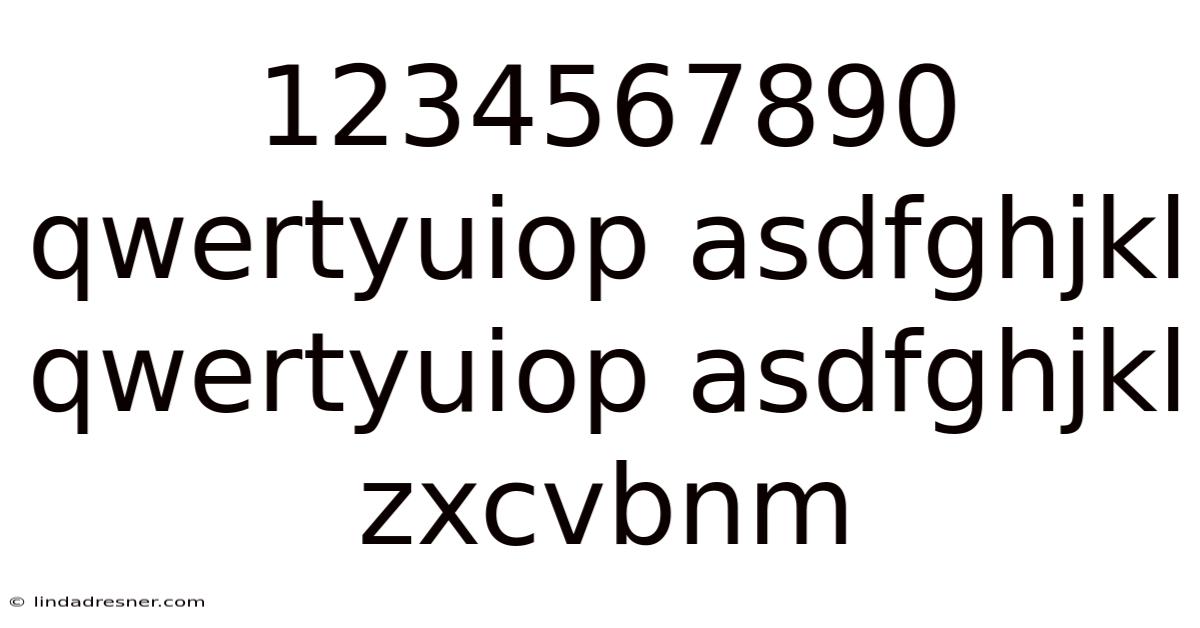
1234567890 qwertyuiop asdfghjkl qwertyuiop asdfghjkl zxcvbnm: A Deep Dive into the Keyboard’s Most Iconic Sequence
The string 1234567890 qwertyuiop asdfghjkl qwertyuiop asdfghjkl zxcvbnm may look like a random jumble of characters, but it actually represents a cornerstone of modern typing practice. From elementary school computer labs to professional coding bootcamps, this sequence serves as a benchmark for speed, accuracy, and finger coordination. In this article we will explore the origins of the phrase, its role in skill development, the science behind finger movement, and practical ways you can integrate it into daily routines. By the end, you’ll have a clear roadmap for turning a simple keyboard drill into a powerful tool for productivity and ergonomic health.
The Historical Roots of the Sequence
The 1234567890 qwertyuiop asdfghjkl qwertyuiop asdfghjkl zxcvbnm pattern emerged from the need to test every key on a standard QWERTY keyboard. Early typists would run through the top row, middle row, and bottom row in order, ensuring that each finger touched its designated key. Over time, educators realized that this linear progression also highlighted the natural rhythm of hand movement, making it an ideal warm‑up exercise.
Why does the order matter?
- Top row (qwertyuiop) engages the pinky, ring, middle, and index fingers of the left hand, followed by the right hand’s similar group.
- Middle row (asdfghjkl) forces the left hand’s index and middle fingers to stretch across the home row, while the right hand mirrors the motion.
- Bottom row (zxcvbnm) completes the cycle with the left hand’s little finger and the right hand’s corresponding keys. Understanding this layout helps you appreciate why the full string is more than just a random assortment—it’s a systematic traversal of the entire keyboard surface.
How the Sequence Boosts Typing Proficiency
When practiced regularly, the 1234567890 qwertyuiop asdfghjkl qwertyuiop asdfghjkl zxcvbnm drill offers several measurable benefits:
- Increased Speed – By repeatedly moving through each row, muscles develop muscle memory, reducing the latency between visual cue and finger response.
- Improved Accuracy – The linear progression catches errors early; a missed key is immediately apparent, prompting correction before the pattern continues. 3. Enhanced Finger Independence – Each finger learns to act without interference from adjacent digits, a crucial skill for touch typing.
Tip: Start at a comfortable pace, then gradually increase speed by 10‑15% each week. Consistency beats intensity when building lasting habits.
Scientific Explanation: Motor Learning and the Brain
Research in motor neuroscience shows that repetitive finger sequences activate the primary motor cortex and cerebellum, regions responsible for coordinated movement. When you type the 1234567890 qwertyuiop asdfghjkl qwertyuiop asdfghjkl zxcvbnm string, your brain creates a procedural memory trace that can be recalled automatically.
Not the most exciting part, but easily the most useful.
- Chunking: The brain groups the sequence into manageable “chunks” (e.g., “1234,” “5678,” “90qw”). This reduces cognitive load and speeds up execution.
- Error Correction Loop: Each mistake triggers a feedback loop involving the prefrontal cortex, prompting you to adjust finger placement. Over time, this loop becomes faster and more efficient.
Italic emphasis on procedural memory underscores why the drill feels effortless after sufficient practice—your brain has essentially “automated” the movement.
Practical Applications: Turning the Sequence into a Daily Routine
1. Warm‑Up Before Work Sessions
Begin each computer session with a 5‑minute run of the full string. This primes your fingers and reduces the likelihood of early‑day typos Simple as that..
2. Integrated Coding Practice
Many programmers use the sequence to test keyboard shortcuts and macro recordings. By mapping each character to a command, you can verify that your IDE recognizes every keystroke correctly.
3. Ergonomic Breaks
During long typing sessions, pause every 20 minutes to perform a slow, deliberate version of the string. This stretch promotes blood flow and prevents repetitive strain injuries (RSI) No workaround needed..
4. Gamified Learning
Create a scoreboard where you record the time taken for each full pass. Compete with friends or track personal progress on a spreadsheet. The gamified element adds motivation and accountability Took long enough..
Step‑by‑Step Guide to Mastering the Sequence
Below is a concise, numbered list that you can follow to structure your practice:
-
Set a Baseline – Type the entire string once at a comfortable speed. Record the time taken.
-
Isolate Rows – Practice each row separately (top, middle, bottom) until you can do each without looking at the keyboard.
-
Combine Two Rows – Merge the top and middle rows, focusing on smooth transitions between fingers.
-
Add the Final Row – Incorporate the bottom row, maintaining consistent rhythm. 5. Increase Speed – Use a metronome or typing software to gradually raise the tempo by 5‑10 words per minute (WPM).
-
Monitor Accuracy – Aim for 98%+ accuracy before attempting speed increments.
-
Reflect and Adjust –
-
Reflect and Adjust – Review your accuracy logs and timing records weekly. Note recurring error patterns (e.g., fumbling the transition between the middle and bottom rows, or mis-hitting the number 0) and tweak your practice routine to target those weak points. If you hit a speed plateau, scale back tempo by 5 WPM for 2–3 sessions to rebuild accuracy before pushing forward again.
Advanced Variations to Sustain Progress
Once you consistently hit 98% accuracy at your target words per minute, the basic sequence may become too rote, diminishing its cognitive and motor benefits. To keep the drill challenging and applicable to real-world use cases, experiment with these modifications:
- Reverse Execution: Type the string backward (zxcvbnm lkjhgfdsa poiuytrewq lkjhgfdsa poiuytrewq 0987654321) to force your brain to break automaticity and re-engage focused attention, further strengthening neural pathways for the same key groups.
- Modifier Integration: Add shift, ctrl, or alt modifiers to random characters in the sequence (e.g., 1234!@#$ qWeRtYuiOp) to practice common shortcut combinations used in coding, design, and spreadsheet work. This also helps you test modifier key functionality across different operating systems.
- Layout Switching: If you switch between keyboard layouts (e.g., standard QWERTY to Dvorak, or full-size to 60% compact boards), run the drill on each setup to build cross-layout fluency and reduce adjustment time when switching devices.
- Proprioceptive Practice: Once you can type the full sequence without looking at the keyboard, try 1–2 passes with your eyes closed to sharpen spatial awareness of finger placement, a skill that transfers directly to faster, more accurate touch typing in unstructured work tasks.
Conclusion
The 1234567890 qwertyuiop asdfghjkl qwertyuiop asdfghjkl zxcvbnm sequence is far more than a random string of characters: it is a targeted, low-barrier tool for building touch typing fluency, reducing repetitive strain, and streamlining workflows for anyone who spends significant time at a keyboard. Even so, by leaning into the brain’s natural procedural memory processes, integrating the drill into daily routines, and iterating on practice as your skills grow, you can turn a simple 47-character string into a long-term asset for both productivity and physical comfort. Consistency matters far more than speed at the outset—even 5 minutes of daily practice will yield measurable improvements in as little as two weeks.
Building upon refined techniques, integrating these insights ensures sustained improvement. Consistent application solidifies foundational abilities, transforming potential limitations into strengths Not complicated — just consistent. Still holds up..
Final Note
Mastering such skills requires unwavering focus and adaptive discipline. Every practice session refines precision, builds resilience, and enhances overall proficiency. The journey toward expertise culminates in seamless integration, where effort becomes effortless mastery.
Conclusion
Thus, cultivating these habits fosters not only technical excellence but also confidence and efficiency. The collective effort of practice and reflection ensures enduring progress, making typing a reliable, empowering tool. Continuous engagement guarantees that growth remains a natural outcome, solidifying typing as a cornerstone of productivity and comfort Most people skip this — try not to..
Conclusion
Embracing this path transforms individual capability into collective advantage, affirming that dedication yields lasting results. The journey, though demanding, paves the way for sustained success Nothing fancy..
